
Knee osteoarthritis
The most common form of arthritis, affecting cartilage, bone and the joint lining. GAE is typically considered for mild to moderate osteoarthritis, and some advanced cases too.
Genicular artery embolization (GAE) is a minimally invasive, image-guided option for selected people with knee osteoarthritis pain. A screening visit helps decide whether it fits your diagnosis and goals.
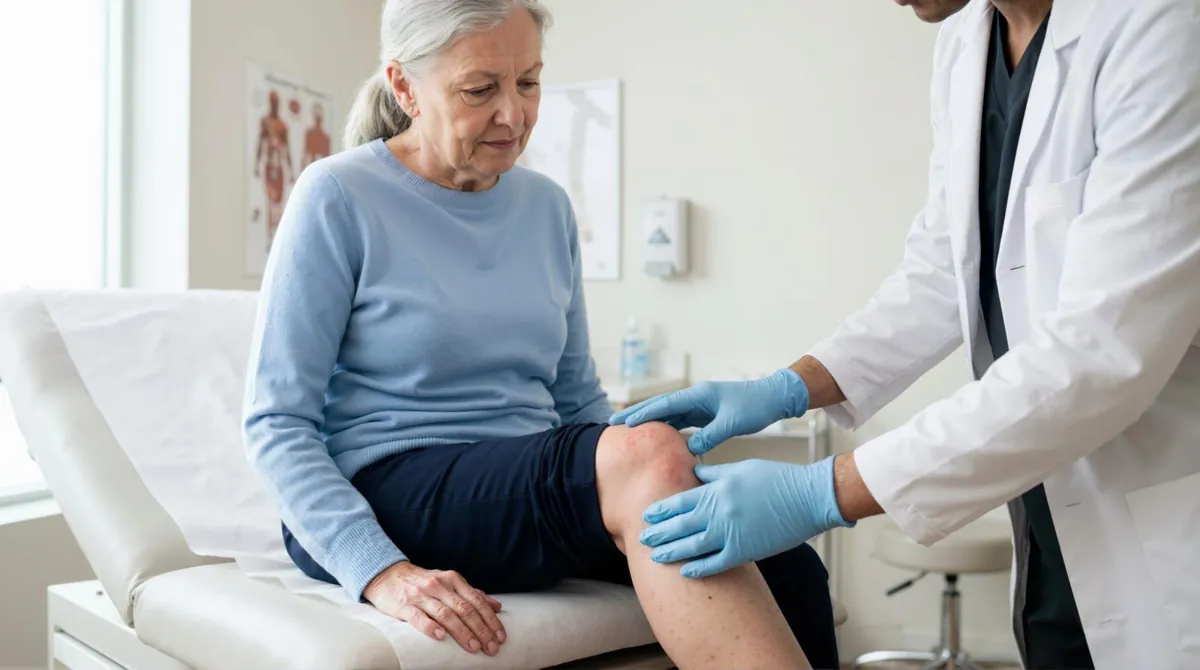
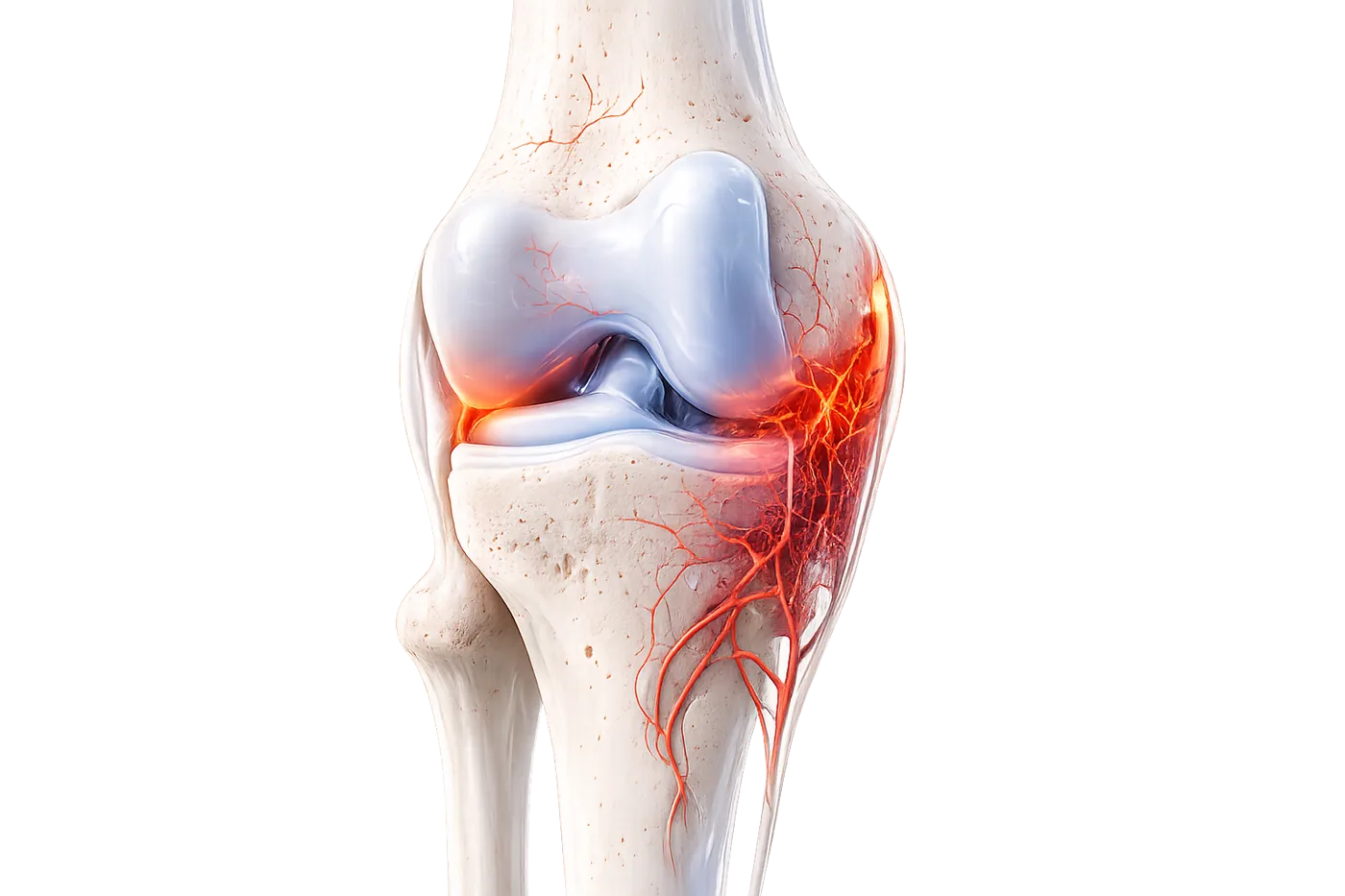
Arthritis is more than "wear and tear." Cartilage, bone, the joint lining and other parts of the knee can all change, and two people with similar X-rays can hurt very differently. An inflamed knee lining can grow new, abnormal blood vessels, and these may help keep inflammation and pain going.
Our team starts with an accurate diagnosis and the foundation of care: exercise, physical therapy and self-care. When pain keeps going despite good care, we can evaluate whether injections or GAE may help. GAE does not regrow cartilage or cure arthritis, some people still need joint replacement, and results vary.
If any of these keep you from the things you enjoy, a visit can help find the cause and the options that fit you.
The most common form of arthritis, affecting cartilage, bone and the joint lining. GAE is typically considered for mild to moderate osteoarthritis, and some advanced cases too.
Arthritis can make the thin lining inside the knee swollen. New blood vessels and nerves can grow there and add pain.
Some people with ongoing pain after knee replacement may be evaluated for GAE. This use is still being studied and is decided case by case.
Hip or back problems can cause pain felt in the knee. GAE treats pain arising from the knee itself, so finding the true source comes first.
Every plan starts with an evaluation. Your provider reviews your history, imaging and the treatments you have tried, then explains which options may fit.
Education, exercise, physical therapy and weight management when relevant are the core of knee arthritis care, not just a waiting period. Bracing, a cane, heat or cold and pain medicines can add to this base.
Who it may help: Everyone with knee arthritis pain.
Steroid injections can give short-term relief for some people. Gel (hyaluronic acid) and PRP injections are also options, though the evidence for them is mixed.
Who it may help: People whose pain keeps going despite exercise and self-care.
GAE targets the genicular arteries, the small vessels that supply the knee lining. A thin catheter is guided from a small puncture, usually at the top of the thigh, and contrast dye shows areas of extra blood flow, which often match where your knee hurts. Tiny particles are released into those branches to slow the flow while the main arteries stay open.
Who it may help: Adults with knee osteoarthritis pain that limits daily life after 3 months of medicine, therapy or injections, who are not ready for, not able to have, or want to delay knee replacement.
Our team checks your insurance before your visit.
We review your history, examine your knee and look at your imaging. Bring your medication list, insurance card, recent X-rays or MRI reports, and a list of treatments you have tried.
You and your specialist make a plan together, usually starting with the simplest options. We explain benefits, risks and alternatives, and if a procedure is not a good fit, we will tell you and suggest next steps. We check your insurance before anything is scheduled.
If you are a candidate, the procedure is done at our main center through a small puncture, with numbing medicine and relaxing medicine. Most people rest a few hours and go home the same day.
Expect a sore knee for a few days. Pain may ease over weeks, and we review your progress at follow-up visits over 3 to 6 months. Keep exercising; it helps you get the most from GAE.

Dr. Kumar is a board-certified cardiologist and vascular specialist who leads the Heart Vascular & Leg Center and Advanced Joint Pain & Vascular Center team. He treats arterial and venous disease, nonhealing wounds and joint pain with minimally invasive, image-guided techniques, and trained in joint embolization in Tokyo with Dr. Yuji Okuno.
No. GAE treats painful blood vessels through a pinhole in an artery. Knee replacement swaps damaged joint surfaces using open surgery. GAE does not rebuild cartilage or straighten a crooked knee. Having GAE does not prevent a later replacement, but it is not a substitute when surgery is clearly needed.
It is worth discussing if you have knee arthritis pain despite good care. Pain from your hip, back or nerves needs a closer look first, and an infection or a problem needing surgery may come first. Only your specialist can decide whether you are a candidate.
Most people go home a few hours after the procedure. Some soreness in the knee and a small bruise at the puncture site are normal for a few days. Pain relief often starts gradually over the following weeks, and the full effect may take a few months.
A numbing shot is used at the puncture site, and you may get relaxing medicine. Many people stay awake but comfortable. Arrange for an adult to drive you home and stay with you overnight.
GAE is a newer procedure. Most studies so far have been small, and many had no comparison group. Studies comparing GAE with a placebo (sham) procedure have had mixed results, and larger trials are under way. Results vary from person to person.
Coverage for joint embolization varies, and some plans consider it still being studied. Before your visit, our team verifies your coverage, referral requirements and any expected costs. We accept Medicare and many other plans, but plan acceptance does not mean every procedure is covered.
Enter your ZIP code or city to see our offices sorted by distance. Procedures are done at our main center; our other offices see patients for consultations and follow-up visits.
Find the center that matches your symptoms. Each one is part of Advanced Joint Pain & Vascular Center, a division of Heart Vascular & Leg Center.